#15daysofgrateful

We’ve passed Autumn Equinox, Halloween, and now Thanksgiving is coming, and after that the Winter Holidays and the New Year!!!

Every year, it feels like time begins to move ever more quickly just about now, doesn’t it?

Here in Minnesota, the second half of Fall is here. Overnight, the cold and graying blew in–we went from gorgeous blue skies and Indian Summer to hurrying to empty the rain barrels and rake the leaves, to winter coats and mitts, and to putting the garden to bed.


We have 15 days–if you include today–
to prepare our hearts for Thanksgiving.


Let’s use them to practice gratefulness!!

I’m choosing “gratefulness” instead of “gratitude” because it feels more active to me, even though they are both from the same root word, going back to Latin, gratus, or pleasing, agreeable, kind. Let’s practice creating these feelings in our bodysoul so that by the time Thanksgiving arrives, regardless of how quickly we are moving, the experience of gratefulness can shine through.

How it Works:

  • Every day, practice being grateful–for something as small as appreciating the 1st sip of tea or coffee or the soft, welcoming cocoon of your bed, to something as big as the fact that you are alive on this planet!
  • Here’s the key: Being grateful is not an idea in your mind, although your mind might help you come up with something to practice with.
    • In order to practice being grateful, you need to take the time to actually experience being grateful in your whole bodysoul. You need to feel the gratefulness. 
    • Where do you experience it in your body? What does it sense like?
    • How do you experience it in your heart (feelings)?
    • What happens in your mind (thoughts, quality of mind)?
    • Savor it, take it all the way in, infusing yourself with gratefulness as much as you can, from the tips of your toes to the top of your head!
  • Then post below and/or on your profile in Facebook with this tag: #15daysofgrateful.

I’ll begin: 

I am grateful that we finished painting our dining room! #15daysofgrateful


Ready, set, go!


If you want more support practicing being grateful, join me at my class, Practicing Gratitude, Sunday, November 19th from 1:00-2:30.

Gratitude heals your heart, helps your mind calm down, and even creates health in your body. So, why do we tend to wait until Thanksgiving to really focus on it? Join Holistic Life Coach Katy Taylor to learn not only the power of gratitude, but also hands-on practices you can take into your daily life.


I look forward to practicing with you!

with each step

“We can’t solve problems by using the same kind of thinking
we used when we created them.” ~ Einstein

Dave and I taught a daylong on the Law of Three, a deeply embedded teaching of the Enneagram, for our Minnesota Enneagram community this past Saturday.

The more I work with this teaching in my own life, the more I experience this truth—

When I’m stuck trying to solve something with my thinking, I don’t solve it by chewing over the same thoughts…

When I’m stuck in my feelings, re-experiencing them over and over again, they do not release…

There’s actually something valuable about that funny and famous cartoon (I paraphrase):

  • Patient: Doctor, when I move my leg like this, it hurts.
  • Doctor: Then don’t move it like that! 🙂

If we’re not running our habitual patterns to find an answer—overthinking, overfeeling, avoiding, denying, repressing, all of which cause us pain—what DO we do?

We apply what the Buddhists call skillful means.

Monday morning after my run, aware of a problem my mind and heart had not solved from the day before, I was practicing one of my favorite walking meditations from Thich Nhat Hanh:

The mind goes in a thousand directions.
The beautiful path is the path of peace.
With each step, a gentle wind blows.
With each step, a flower blooms.

This is an example of using skillful means—

When you’re stuck in your mind or heart, running the same old tapes…

Try coming back to the body.

As I walked this meditation, my senses came alive–with each step:

  • the gentle, cool breeze was blowing and kissing my face,
  • the flowers in yards and boulevards were blooming,
  • the trees were standing solid, tall, rooted, their leaves waving to me as I passed,
  • the sun filtered through the canopy, lighting up all it touched,
  • the moon, moving to half-waning, holding watch in the sky.

And my body came online, her intelligence sparkling, softening, supporting all that was trying to work itself out in my mind and heart.

No big “AHA,” but now, where there wasn’t before, there is space for something new to arise.

It can be this simple.

We can trust the intelligence of the body to support the heart and mind.

What body practices do you have in place to help you open to more spaciousness when you are stuck?

Save

Save

Do Two Halves Make a Whole?

Apple pie and cheddar cheese.

Fear and courage.

Hungry and satisfied.

Independent and dependent.

Grief and compassion.

Utter lostness and presence.

Single and partnered.

Strength and helplessness.

Female and male.


Dualities. Opposites. Two halves of a whole.

I name them, breathe them, own them.

They are part of our human experience.

Without one, the other does not arise.


Often in relationship we see this clearly. If I hold down the pole of the kids keeping their room clean, you will hold down the opposite one—the kids should do what they want. If I say I want to work all day, you say, we’d better give ourselves enough time to rest and do other things…


It’s like we are covering the full spectrum of life in these dualities.


One complements the other. How could I really feel satisfied if I never felt hungry? Without being lost, how would I feel my presence? How could I really enjoy my apple pie for breakfast without a good hunk of cheddar cheese? 😊 (Thanks, mom!)


Diamond Approach teacher AH Almaas takes it a step further and says that the qualities of our Essence arise as needed.

It’s not that we just don’t feel the pole without its opposite. An Essential Quality like Compassion has no need to arise unless a state of suffering like grief or fear or shame calls for it. Strength only arises when needed—when I’m feeling helpless, weak, unconfident, etc.

One is not “good” and the other “bad.”

That’s just another duality—each side of the equation keeping the other alive…


The old saying “Two halves make a whole” has some relevance here.

My mom used to emphasize that in relationship, that saying is not true—if we come to each other as halves, we won’t find wholeness. We each need to be whole in ourselves first.

This also applies in looking at life through the lens of duality. If I get caught up in juxtaposing the halves, the good-bad, strong-weak, independent-dependent, happy-sad, etc., I am not living into the wholeness that is possible.

Holding each pole of the duality, welcoming it, getting to know it, and not grasping, but opening ourselves (heart, body, and mind) allows something new, fresh, and essential to arise.

How do you work with duality in your life?


Dave & I are teaching a full-day workshop about this:


And I will be teaching a 4-week series on Forgiveness, which I have found is a HUGE part of being able to open to the innate wholeness, too:

Unfolding the Heart: The Journey of Forgiveness

We hope you will join us!

and there is only the dance

We begin in the name of Allah.
Alleluia, Lord have mercy, Christ have mercy.
There is no God but God.
Sacred, Holy, Heaven here on earth.

Just four of the many chants/dances we began with our first night of the Dances of Universal Peace retreat with Sufi teacher Maitreya this past weekend.

We sway, bow, pray, sing, open…

Holding hands with our neighbors…

  • stepping into the center, lifting our hands and hearts and minds to the Divine,
  • bowing to each other, to True Nature within, to ourselves,
  • collecting the mercy and grace in our cupped hands and letting it pour down like rain, blessing us head to toe.

Maitreya reminds us over and over that we are already enlightened.

There are obstructions to this light, but it is already within. We dance to remind ourselves, to reconnect to this light within, among, and beyond us.

The rhythm of the simple chants and steps entrains the bodysoul.

Step, bow, turn, spin.

Forward & backward, surrender, change course, turn inward & outward.

 Again. Again. Again. Again.


Perfection in the repetition, in the fullness of the unifying rhythms of body, heart, mind, and soul.

This is embodied group spiritual practice, joining hands, hearts, and voices together to weave the fabric of Love.

How do you embody your spiritual practice?

Join me for another, perhaps more accessible-in-daily-life, form of embodied spiritual practice: Healthy High Tea in the garden, in which we mindfully nourish our bodies, hearts, minds, and souls with real food and good company.

Save

Building Temples of Forgiveness

This is the final post in a 3-part series on Unfolding the Heart.
Find the first post here.

Let’s take this a little deeper.

Let’s look for the innocence.

This was a hard one for me in the forgiveness work I’ve been engaged in over the past year.

To protect others and not cause more harm, I’ll give you the general outlines to describe what I’ve been working with:

I worked for a spiritual organization for 14 years and when I decided to leave due to integrity issues last year, they didn’t pay me the $5,800 in back vacation pay and consulting fees they owed me. They said they only way I could be paid was to sign away that 14 years of my life—to never publicly claim I had worked there. And to top it off, they still won’t talk with me and tell me why. I went from being the most valued employee to this.***

For the first half-year, all I could do was suffer.

  • I judged them as wrong and bad and lived in fear.
  • I went over and over the situation in my mind to try to make sense of it and see my part, learn my lessons…
  • I mostly saw their guilt and wrongdoing. 😦

Then I found some work to help me with the F-Word, forgiveness.

And I saw how I was keeping my own suffering going by splitting off and separating myself from them:

  • I was good one, the wronged-one, the victim.
  • They were the bad ones, the wrong-ers, the perpetrators.
  • End. Of. Story.

As you can imagine, this view was not helping me find freedom or a way to move forward in my life!

So I decided to look for their innocence—and I found it.

I saw how they were not doing this to me on purpose. They were living out their own separation and splitting, their own fear, their own attempt to be happy. I just happened to be affected by the wake of their huge ocean waves.

When I looked deeper, I could imagine the suffering underneath their actions, what might be causing them to treat me this way…

And over time, my heart unfolded, becoming bigger and wider and more available to Love.

Do I agree with their actions? No.

But I no longer judge them as bad or wrong because I can see underneath the rocky waves to the ocean of Oneness that connects us:

  • the ocean of innocence,
  • the ocean of groundlessness,
  • the ocean of Love.

And I invite you to do the same.

Whether you are working with forgiving yourself or an “other,” you can always look for the innocence underneath the actions.

You can see that underneath it all, there is an innocent, small childlike place that is just trying to be happy, to feel OK, even to survive.

peony-white-beginning 1200x

We can’t force anything. We can’t force our hearts or the heart of the “other” to unfold. It has its own timing and process of growth.

But we can look for the innocence. And notice how our body, heart, and mind respond.

Make this practice your own. Forgiveness is usually a long process, and it can’t be rushed.

I found that I needed to fully feel my own suffering before I was willing to see their suffering and innocence.

And after that, I needed to keep turning my perspective toward innocence, toward a willingness to see with fresh eyes. Every time the feeling of being wronged arose, I tried to reorient to the Oneness with an intention or prayer.

May I see their innocence.
Open my mind to a deeper truth.
I am willing to see Love. Show me.

I let my heart yearn for this opening.

Research shows that those who practice forgiveness—and it is a lifelong practice—are healthier and happier.

In one Stanford University experiment, people reported fewer backaches, headaches, muscle pains, stomach upsets, and other common physical signs of stress. They also reported higher levels of optimism, hope, and self-confidence.

In a study at University College of London, they found that those who didn’t practice forgiveness suffer from a 55% higher risk of serious heart disease.

The negative emotions of injustice, anger, bitterness, vengeance, unfairness, and more cause biochemical changes in your body that damage your physical health.

And setting the physical health risks aside, who wants to live in the constant state of negativity that unforgiveness creates?

Contrary to popular belief, we are not stuck here just because something “bad” happened that we had little or no control over. We have a choice—a choice to do our own work and practice forgiveness, over and over and over again.

Forgiveness is an act of the heart, a movement to let go of the pain, the resentment, the outrage.

And as Buddhist teacher Jack Kornfield says so simply: Letting go begins with letting be.

That’s why the first step is to stay with our suffering—we let it be, we acknowledge it, we allow it, without judging, but with gentle holding and compassion. (You can read more on that in the 2nd part of this series.)

By opening to the pain we are trying to push away, we clear a space for something new, fresh, and alive to awaken in our hearts, for a return to Love.

Forgiveness is about accepting what happened (letting it be) and finding a way to release it so that you can live now, regardless of what happened in the past.

  • It’s about releasing the attempt to control the outcome and letting your heart and your life unfold in the present.
  • It’s about allowing healing without knowing or controlling how that will happen or look.
  • It’s a return to an open body, heart, and mind, softened by the healing power of Love.
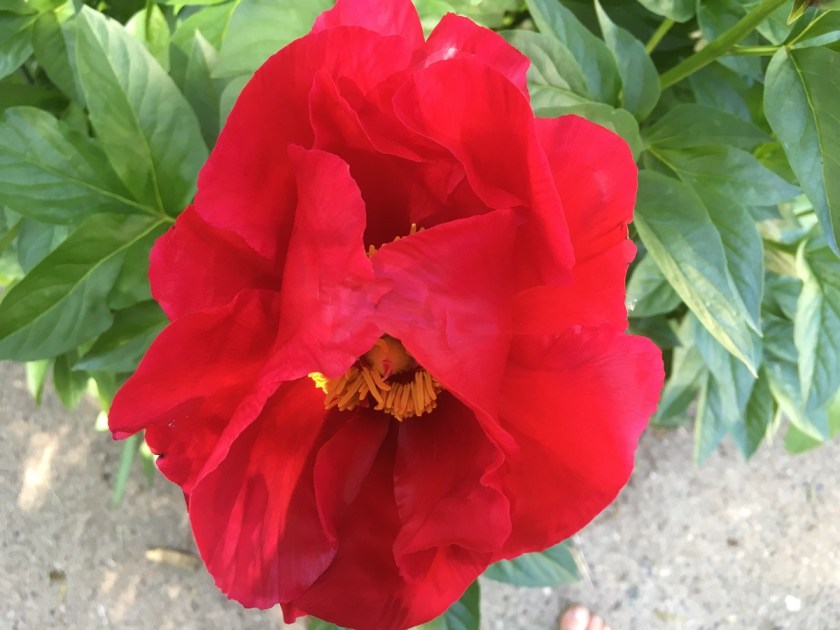
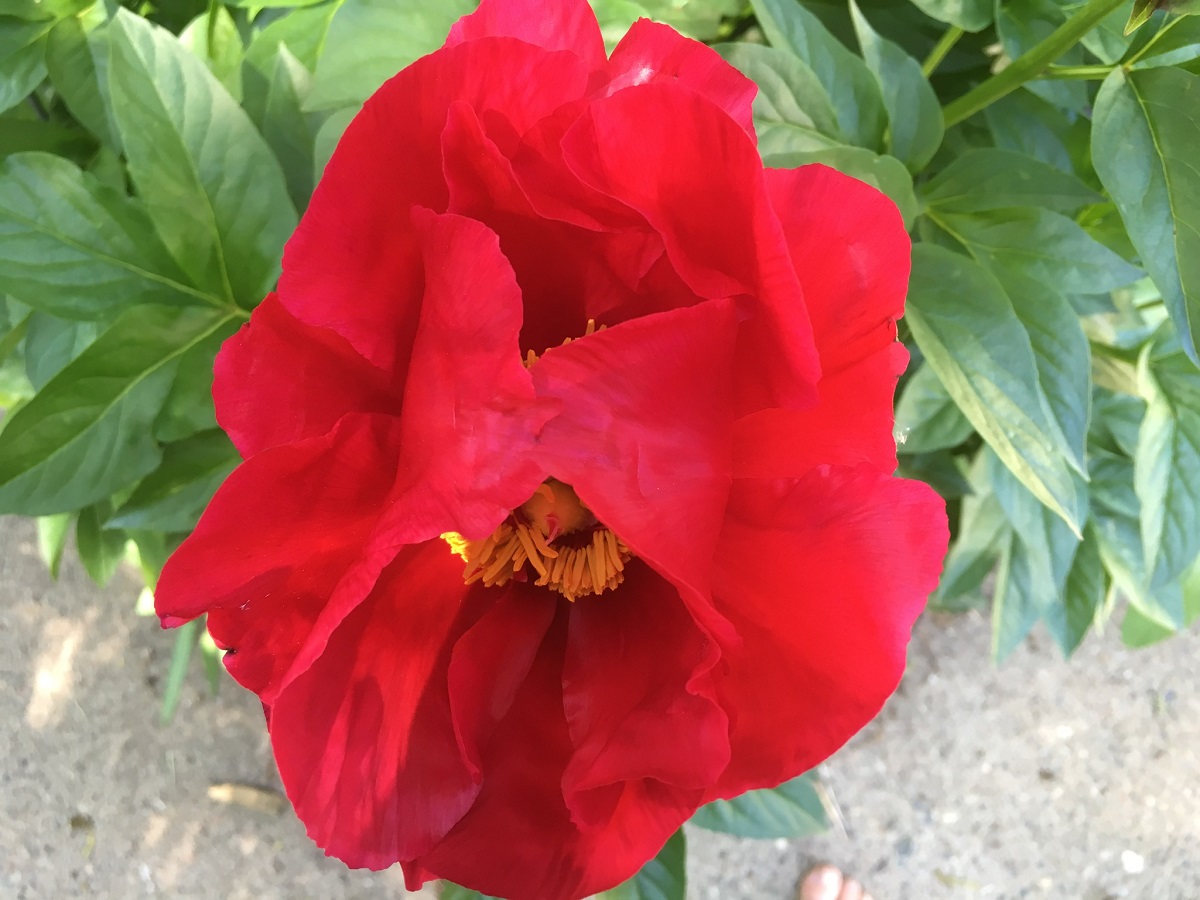
red peony partially closed-1200x

One last practice, this one from Rob Eller-Isaacs, one of our ministers at Unity Church Unitarian in St. Paul, Minnesota.

I invite you to close your eyes again and bring your grievance to mind, heart, and body once more.

  • Think about it, and then sense and feel how it affects you.
  • Let these things be as they are, without trying to change them, opening to the truth of your feelings and sensations in the moment.
  • If you have a sense of your or the other’s innocence, bring that to body, heart, and mind—if not, no worries.

Now place one hand on your Heart Center and one on your Belly Center, below your belly button. Let them be kind, loving, allowing hands. Accepting you just as you are, like a loving mother would.

And repeat silently:

  • I forgive myself.
  • I forgive you. (Perhaps this is said to a part of yourself.)
  • We begin again in Love.
  • [Repeat this 3x]

And say it once outloud as if we were saying it all together, to feel the solidarity and possibility in this common intention for our lives:

  • I forgive myself.
  • I forgive you.
  • We begin again in Love.

I end with a quote from Jack Kornfield that encourages us to take on the sacred work of forgiveness:

If only we could help each other build temples of forgiveness
instead of prisons. We can. In our own hearts.

** Jack Kornfield quotes from The Art of Forgiveness, Lovingkindness, and Peace

*** Note: On August 8th, 2017, I received financial payment in full without having to sign my affiliation away, after over a year of spiritual work on my own. (With support of friends and teachers!) It happened after I had fully released any expectation of payment and had focused on my own work and ways I could make amends.

Save

Beyond Rightdoing and Wrongdoing

This is the 2nd of a 3-part series. Read the first.

Just choose Love over Fear!

Love forgives. Fear blames and holds grudges.

Not so fast.

This may be true. In fact, I know it is, but for most of us it’s not that simple. The truth is:

Love is able to hold the deeper view of non-separation,
so there is no-one to blame and hold a grudge against.

Our ego personality can’t see this. We see ourselves as separate beings that things are done to.

  • The separate being of me does something to the separate being of you that causes harm in some way.
  • Or vice versa.

But what if this view is a wrong-minded perception as A Course in Miracles would say?

What if it’s really true that at our core, all is One, as all faith traditions I’ve come across affirm.

It’s true that this Oneness is housed in separate bodies. There’s no denying that we look different on the outside.

But the core of reality is consistently described as a Oneness from which all things arise.

The metaphor of the ocean helps me understand this.

  • I think we can pretty easily see how the water in the ocean is one water, right?
  • And yet the waves take many different forms.
  • And drops of water take shapes, too—droplets, spray, some bigger or smaller…
  • And the bottom of the ocean might be completely still and calm while a storm is raging above.
  • It’s all the same ocean, all the same water… all the same Oneness.

If we accept this as true, then when our separate egos do things that consciously or unconsciously cause harm, what are we harming?

Our ego personalities? They are part of the Oneness, too.

Any harm done by or to us affects us and the other. We are completely connected underneath the surface waves, just like the water.

From this perspective, Oneness or you could call it Life / God / Goddess / True Nature / Being is unfolding through us:

  • Through our actions.
  • Through our minds and hearts.
  • And all the harm done by or to us is part of this unfolding.

YIKES!

This goes directly against our very human desire to know what is right or good and to make sure we are on the right side of it.

We want to be good people. We want to know who has done something wrong and do something about it.

But what if there is no Good or Bad?

  • What if our trying to make situations fit into good / bad, right / wrong is really just an attempt by our dualistic mind to know where we stand, to understand the world, to feel a sense of security and stability?
  • What if it’s a wrong-minded perception that causes us to miss the Oneness?

Buddhist nun Pema Chodron, in her book When Things Fall Apart, says:

The whole right and wrong business closes us down and makes our world smaller.
Wanting situations and relationships to be solid, permanent, and graspable
obscures the pith of the matter, which is that things are fundamentally groundless.

This can feel very scary. All of a sudden, it’s not so clear how to determine if I’m a Good person anymore.

  • If I can’t make the other who has hurt me Bad, how do I know I am Good?
  • Doesn’t practicing the Good F-Word make me a Good person?

If everything is part of the Oneness, there is no Good vs. Bad.

  • Why would the Oneness split off parts of itself?
  • Doesn’t it express through everything, in all forms?

As Pema continues:

Whether it’s ourselves, our lovers, bosses, children, local Scrooge, or the political situation,
it’s more daring and real not to shut anyone out of our hearts
and not to make the other into an enemy.

We learned really early on how to be good from our parents, our culture, our personality, our religion… and it got internalized by our inner critic that lets us know whenever we stray by judging us from the inside to get us back on the straight and narrow.

But does this splitting of good / bad, right / wrong serve us?

  • Does it make you happy to separate yourself as over here and look at others as over there?
  • Does it make you happy when your inner critic judges you as doing something wrong?
  • Does it make you happy when you judge others as wrong, bad, immoral, ignorant, corrupt?

I doubt it.

It might whip you into action, but what is that action motivated by?

Probably not love. Or Oneness.

And we know that even social justice from that place can become tainted and unloving—without awareness of the Oneness, it can only hold a slice of the truth.

Pema suggests we “contemplate the fact that there is a larger alternative to [making ourselves right or wrong], a more tender, shaky kind of place where we could live.”

Practice Time!

I invite you to bring to mind a circumstance in which you are having a hard time forgiving yourself or someone else.

  • Close your eyes and give yourself to thinking about it.
    • Ideally something up close and personal.
    • But if you’re having a hard time coming up with something, try choosing a part of our current political situation.
  • Notice your thoughts: the judging, the blame, the anger, the outrage. All of it.
  • Now bring your awareness to your heart and body.
    • How are you feeling? See if you can name 2-3 feelings. If you’re not sure, look for hurt, anger, resentment, grief…
    • What’s going on in your body? How is your body reflecting this suffering?
      • Scan for places of tension, numbness, rigidity, clenching…
      • Of collapse, shoulders rounding in to protect your heart, slouching, lack of energy…
      • Or anything else…
  • If you’re willing, place your hand on the center of your chest, on your heart center.
  • What if all this suffering is not good / bad, right / wrong?
    • What if it just is? It is your very human response to trying to make sense of something really hard.
  • Can you be with that, accept that, without needing to separate yourself or find a sense of solidity by being the good or the bad one?
  • What if it’s the Oneness of life expressing through you and this other? For some reason that you do or don’t understand.
    • For your growth, for the other’s growth, for our world’s waking up.
  • Can you stay with the pain, the soft vulnerability of that without splitting?
  • Can you stay with this groundless place of the ever-changing flow of life and your place in that flow?
  • Can you find a place of refuge in this open, soft moment of willingness?
  • Thank you.

Our egos, in an attempt to find happiness, do things that cause real pain to ourselves and others.

Suffering happens when we resist and don’t accept what is happening. Responding from suffering creates more suffering. It solidifies the right / wrong position and sets us up to judge ourselves and others.

We don’t need suffering to get life done, to take right action, to work for social justice.

For that, we need Love. Only Love will soften our hearts and clear our minds to truly guide us into right action.

As Rumi says, “Out beyond ideas of wrongdoing and rightdoing, there is a field. I’ll meet you there.”

I’d love to know–How is this landing for you?

Read the 3rd in this 3-part series.

Bowing Practice

I’ve been practicing bowing recently.

When I was researching possible publishers for the book I’m working on, I stumbled upon a book called Bowing by Dahn Yoga Education. I was intrigued and ordered it.

When it came, I devoured it in one sitting and started practicing!

It’s a simple practice, bowing.

Just like the tulips in the photo, that rise in the spring, bloom radiantly, and then release their form to the earth to build up energy for their next blossoming in the following year, bowing is a metaphor for being willing to let go, and then re-form and rise again…when it’s time.

Hands at my heart, I feel myself here, human, woman, being, connecting earth and heaven.

Prayers reach to heaven, draw down into my earthly body, mix the light and dark, the active and still, the blossoming and the release of this form.

And then the downward trajectory, bodysoul (body-heart-mind-soul) returning to the earth with reverence and humility, a sacred return.

How surely gravity’s law, / strong as an ocean current, / takes hold of even the strongest thing /
and pulls it toward the heart of the world.
 (Rilke in II, 16.)

Ashes to ashes, dust to dust, growing from the earth, returning to the earth. Head bowed, touching the earth, hands open to receive.

If we surrendered / to earth’s intelligence /
we could rise up rooted, like trees.
 (Rilke in II, 16.)

Surrendering this moment through the physicality of the bow. My body embodying it so that my heart and mind can learn this gesture as well.

…to fall, / patiently to trust our heaviness. / Even a bird has to do that /
before he can fly.
 (Rilke in II, 16.)

Returning to standing, following the same pathway, with a subtly changed orientation of the heart. Bringing the humble, solid, ever-supportive and accepting presence of earth up into my humanness, connecting heaven and earth.

 How does practicing the bow feel to you?

Free Heart

May a woman’s heart be a vast open field
upon which wild horses can run.

~ Tibetan Buddhist saying

My New Year’s theme for 2017 is Free Heart.

While i knew clearly that this was my path for 2017, i needed time to understand more and to live into it before writing about it. In collaging this theme and then journalling, i have discovered some gems:

I am the One whose heart smiles and can meet and hold and include all things.

I am the One whose body dissolves into ease and bliss, and whose mind opens to accept and know all truths–even those different from mine.

I am the One whose smile breaks into blossom with the freedom in her heart.

I am the One whose life is a blessing.

I am the One who flies above all heartbreak knowing there is always deeper truth than suffering.

I am the One who sings and sings and sings for the tremendous beauty and truth and preciousness of life.

I the One whose unruly and wild heart serves the truth in all beings.

As we are practicing presence this week in my free 5-Day Online Practice Presence for Life Journey, i am reminded that the only way any of this is possible is when i am present.

My heart does not smile or feel wild and free, or able to to feel and also rise above heartbreak when i am not present.

This past weekend, i got to attend The Holy Ideas Workshop with Russ Hudson here in Minnesota. While the material is breathtaking and Russ’s teaching is exquisite, i had a hard time because of a difficult situation i’ve been managing for the past year or so.

Let yourself breathe and trust.
It is only by a courageous letting go that the heart
becomes free.
This is called the wisdom of insecurity.
~ Jack Kornfield in The Art of Forgiveness, p. 160

I was able to be there and practice by breathing and trusting.

As i breathed and held myself in compassion for the hard time i was having, i also consciously felt the support of the floor, the chair, my body, the teachings, the whole community gathered together. This helped me to also trust and to free my heart from time to time to be touched by these wonderful teachings.

My path this last year is really inviting me into the wisdom of insecurity, as a place from which to be free instead of a place to fear.

It’s hard. My body, heart, and mind all want to grab on, to find secure ground–to know what will happen, when, and how…

And yet, when i am able to return to the groundlessness and re-member my wild and free heart, i am home.

reprise: Come, yet again, come.

Come, come, whoever you are
Wanderer, worshiper, lover of leaving
Ours is no caravan of despair
Come, yet again, come.
~Rumi

Both Passover and Easter are about freedom.

The brain, on the other hand, likes patterns it can repeat, which makes it easy to fall into ruts…which don’t feel like freedom.

In one sense, it’s a good thing because the brain following well-known grooves to ride a bike or walk or drive frees up our energy for other things, like learning something new or trying on a new way of being…

But what if some of our repeated patterns aren’t serving us–and yet they keep repeating on autoplay? How do we find our way to freedom?

Come, yet again, come. This is a sweet invitation to come back to ourselves, to stop the autopilot of habit and wake up. To be present and experience the freedom of being right here, right now, in this very moment.

Wherever we are, whenever we notice,
we have the chance to choose freshly again.


We can take a look at what we’ve been choosing.

When I’m not present, my type One orientation habitually and unconsciously chooses to try to improve things–me, you, my environment…life! I just have to learn a little more by reading one more article, to straighten the pile of shoes in the foyer, to update my site to make it more user-friendly…There’s always more to do and never enough time… Your way of getting lost may be very different from mine, but we all have them.

When we notice we are on autopilot, we can ask:

Does what I’m habitually choosing reflect my values?

I often find my value for contemplative quiet time gets relegated to last on my list. Sure, I fit some in every morning, but if it’s something I truly value (and need to be well!) wouldn’t it make sense to create more space in my life for it?

Wanderer, worshiper, lover of leaving…

Why do we wander away, leave what we value?

We forget. We get pulled back into the automatic pilot of repeating habits.

These are so compelling because they are familiar–the patterns have been traveled so often that they feel known, safe, comforting…even if we’d like to change them.

They don’t challenge our sense of who we might be, which might happen if we didn’t follow them. Our self-identity relies on them. In my example, I know myself as someone who is always making things better. This is an integral part of how I define myself, recognize my value, and orient to the world. Who would I be, how would I interact with life if I didn’t need to know myself in this way? What options for being, for freedom might open up?

Holding what I am repeating on autopilot along with my values creates a paradox. How can both be true? And yet they are.

If we hold this paradox with mindfulness, we can receive the wisdom of right action. There is no ultimate “right” way to always respond, no one tried and true way to reconcile these opposites. If there were, believe me, I would have found it! 🙂

When I’m not present, I fall back into habit = unfree.

When I am present, I can hold both the habit and what I value, and see what freely arises as true in my experience right now, in this moment. Letting these guide me, holding the tension, and listening will result in the right action I seek. The next time I ask, the moment may require something else of me.

Come, yet again, come. Being present means I am responding freshly each time I wake up enough to come, yet again, back to myself and hold the paradox. May Passover and Easter remind us of this possibility–the possibility of freedom in any moment that we choose presence.

OK, your turn! What habits do you fall into without thinking? How do these affect your ability to create space for the things you value? How do they affect your freedom?

reprise: babysteps for presence

do you feel it?

it seems since the elections and the inauguration, we’ve been in a confused, chaotic, speeded-up world…

i know it’s easy for me to feel like i have to learn more, do more, be more…

we are bombarded by the outer world, with its messages that we aren’t doing enough, that we’ll feel better if…

and the problem with this?

it keeps us focusing on outer fulfillment. just one more news piece to catch up on, one more piece of chocolate, one more task off the to-do list… then all will be well. then i’ll stop. then i’ll rest. then i’ll be satisfied. hmm, really? 🙂

what can we do to be present
in the midst of it all?

babysteps!!

this is a concept i work with over and over again with myself and my clients…

1. first things first. notice how you get off center. notice what makes you lose your cool, feel off balance, get irritable, impatient, anxious… whatever your version of “off center” is. without awareness, nothing else is possible!

2. in the midst of it. turn to yourself with kindness and friendliness. instead of telling yourself to “get over it,” to “put a good face on it,” to “fake it until you make it,” take a moment and gently acknowledge that it’s hard to feel off center. it’s hard to be this busy. it’s hard to feel disconnected from yourself. with compassion, things soften and change in often unexpected ways.

3. when your heart feels more open, let your brilliant mind help you out some more! what one small thing could you do, RIGHT NOW, to help you be more present. you already are a little more present just from steps #1 & #2. what else would support you? could you stretch, sense your feet on the floor and your breath in your belly, dance, get up and walk around, take a breath of fresh air, get a cup of tea, take a nap? what would support you right now?

4. take that babystep! do it! don’t wait until you finish THAT THING. even if it’s just one minute, give yourself what you need to be more present RIGHT NOW. this is living our practice. this is waking up. this is how real change happens, one babystep at a time. it can be that simple.

What babystep will you take?