Summer Solstice 2022–Becoming an Earth Being

Happy Summer Solstice!

Summer Solstice falls on the 21st of June, 2022 at 2:13 am Pacific Time.

By honoring the solstice, we are participating in earth time, marking the changing of the seasons not by imposed, human-made calendar time, but by following the rhythms and natural changes of the earth as she changes from the new growth and freshness of spring into the full on blooming and vibrant growth of summer.

It’s a time to really lean into and enjoy being embodied, being the animal body that we are, experiencing everything that our bodies enable us to sense, to feel in this amazing and beautiful living earth.

You’ve probably noticed that over the last few years since we moved to the Pacific Northwest, my deep interest is about learning to live with earth, learning to be a responsible, ecological citizen of earth. But this doesn’t quite catch it… there’s also a very deep spiritual yearning to come back to what is my birthright, what is all of our birthright, communion with the living earth.

This blog explorers my journey toward this re-union, and is the current version of the first part of a sermon that I will be giving July 24th, 2022 online for my Unitarian-Universalist Fellowship in Port Townsend, Washington. 

*********

Mom calls me over to see and listen to the yellow grosbeaks that have returned. I notice them, but I’m not really touched. I have other things on my mind.

My sister follows the call at an early age to spend as much time as she can outdoors, to explore and eventually take up outdoor sports and camping, even training to guide others. It all seems like so much work to me, and expensive, and dirty. I have other things on my mind.

It took me many years to begin to understand the importance of reconnecting to earth and to find my own ways of coming home. It’s not that I didn’t have moments of deep connection, but I didn’t prioritize them, and I’ve lived my life in my head a lot.

  • In my teen years, I spent a lot of time believing and being a good born-again Christian.
  • As an adult I studied a lot and traveled abroad, learning German and Swedish.
  • I was always singing, and trying to be a better singer.
  • I’ve read a lot of books about how to heal and grow and develop myself, and coached and taught others about this.

But living my life in my head, even though I studied and taught helpful, spiritual things, hasn’t been enough.

Though I have often found solace and beauty in nature, it was almost as if I have expected nature to be there for me when I needed her. I didn’t realize that there could be some kind of reciprocal relationship.

As Robin Wall Kimmerer reminds us—the land is not broken. It is our relationship to it that is broken.

It’s hard to have a relationship with the land when we as a culture move around so much. The average American moves every 5 years—that certainly makes it hard to have a sense of belonging to the land… Instead of a sense of belonging to the earth, we move to a new place and bring our belongings with us.

We experience nature as a thing, something outside of us, an object that we can use—a resource to use to grow our food, for water to drink, for building materials to make homes and shelters, for fuel to drive our cars and fly to see our friends and family and visit new places, etc.

In his book Biology of Wonder, Andreas Weber invites us to swap out the word “nature” with the phrase “the living earth.” You probably noticed that I introduced the blog with this language. This reminds us that we can enter into a living relationship with earth rather than a one-sided for-human-enjoyment-only experience.

Take a moment with me:
Close your eyes and take a few breaths. And then just open your awareness to your body, noticing any sensation, any aches, any pains, any tingly, bubbly, electrical, flowy, or other sensations. Any warmth, any ease, any relaxation… Just notice this aliveness in your body.

And if you’re having trouble feeling anything, try shaking one hand for a minute and then stop and sense that hand compared to the other one, noticing the extra aliveness.

Andreas Weber suggests that this inner aliveness you feel, this is the same aliveness, the livingness that is in the living earth. This aliveness is the center of our being and is our direct connection with the living earth. Feeling it reconnects us with our bodies, made of earth’s body.

Andreas Weber again: “Nature is about beauty because beauty is our way to experience aliveness as inwardness. Beauty is aliveness felt…”

No wonder beauty calls to us! The beauty we celebrate in the living earth, that we snap photos of, send postcards of, look at picture books of, travel for and long to take in… this outward expression of aliveness reminds us of our own inner aliveness, of our own connection with the living earth.

And we need these reminders desperately since our culture has created a lot of deadness.

At least since settled agricultural life, we have steadily and cruelly enforced a worldview of pillage and domination over the land and any beings—peoples, creatures, other-than-human beings—who stood in our way.

Whether we and our direct ancestors were involved in this or not, our bodies and our relationship with the earth bear the burden of this colonization. In fact, Resmaa Menakem, author of My Grandmother’s Hands, speaks eloquently of how white folk carry the trauma of being perpetrators in our bodies. In addition, most white folk are descendants of people who were treated cruelly in the countries we originally immigrated from. We also carry this trauma of being victims in our bodies.

Because we no longer can sense and feel our inner aliveness and that of the living earth, we overdo to try to get back in touch with it. Too much screen time, too much coffee or caffeine in any form, too much sugar, too much alcohol, too many drugs, too much work, too much play… And not enough contact with the living earth.

So what do we do about this?

How do we become an earth being?


Stay tuned for Part II of this blog at Lughnasadh/Lammas or Fall Equinox in which I share more of my exploration or watch the service on July 24th or after.

Spoiler Alert: I don’t have the answers, just some experience and hopefully, some inspiration! 🙂

In the meantime, though, I’d LOVE to hear about your experience!
What does it mean to you to become an earth being?

Spring Equinox 2022–Life Again!

Spring Equinox, the cusp of even more light.

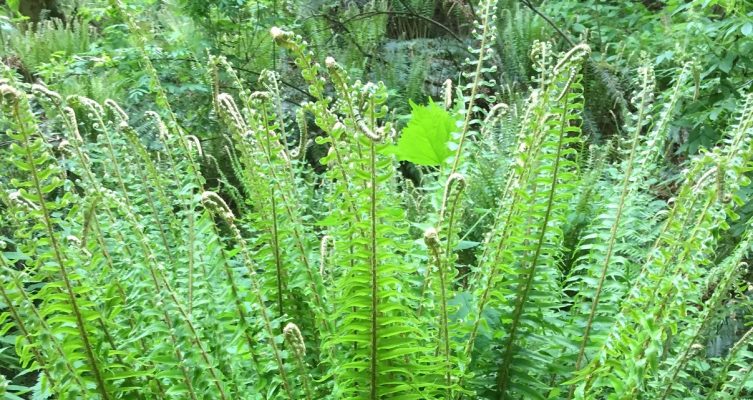
No matter how dark it is—the war in Ukraine, the fight for democracy in the US, the pandemic that never ends, the climate catastrophe… the living earth reminds us that there is always this:

And this:

And this:

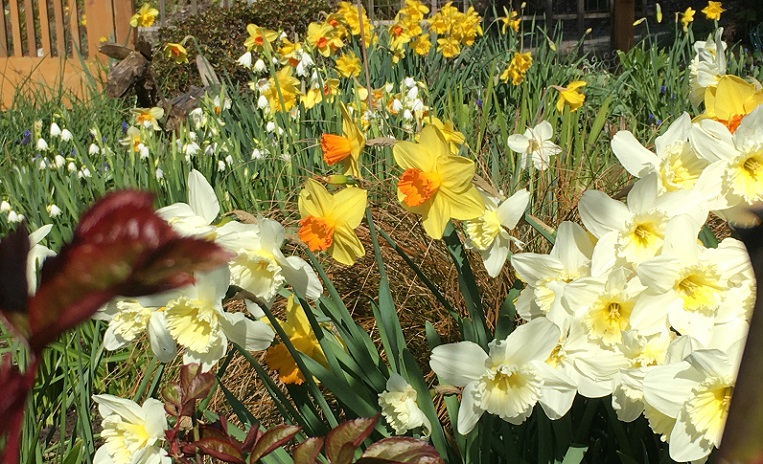
The living earth reminds us again and again and again how to come back to life after the dark, how to send up new shoots and leaves, how to green, how to flower, how to take in and breathe out life.

Drink in the beauty, the fresh growth, the continuing

outpouring and wonder of the living earth!

If you’d like some practice inspiration, here are some ideas from past posts:

This Spring* and always, may the growing light
brighten your body, heart, and mind
and make you more kind
to yourself, to others, and to all beings.

Sing along with me to Laurence Cole’s Equinox round here.


Find more ways to practice with me.

* Spring Equinox 2022 is Sunday, March 20th at 8:33 am Pacific Time in the Northern Hemisphere.

Autumn Equinox–Earth-Based Practice

Happy Autumn Equinox!

Autumn Equinox 2021 falls on September 22nd at 12:20 pm PT. It is the balancing point between light and dark, the approximately equal day and night before we tip toward darkness.

When I think of balance these days, I think of how out of balance we humans have gotten with Eairth,* how our presence has caused such harm to Eairth’s life systems.

Listen to an Equinox round by Laurence Cole
that invites us to walk in balance with Eairth.

How do we walk in balance with Eairth?

What does that even mean?

There are so many plans for mitigating the crisis we find ourselves in, living on a planet whose weather is getting more and more erratic and whose life systems are failing.

For me, the biggest thing is to find a way to live in balance now, in this forest garden home where I am living. To find a way of belonging, of connecting, of being in relationship with Eairth. If I don’t have this, I won’t be able to choose well how to act in the world.


I find what helps me the most are earth-based practices.

It’s been a gradual shift for me to take on earth-based practices consciously, even though I have been slowly moving in this direction for years.

My first official foray into a deeper connection with Eairth was through Sara Avant Stover’s The Way of the Happy Woman. This work helped me get more connected to the seasons—how they manifest not only in Eairth but in me, how I can align with them in how I eat, how I plan my life, even how I do yoga. This was thrilling to me—to realize that I could choose to energetically match my life to the natural patterns of Eairth. 

Tending the earth continues to teach me about how alive Eairth is. When I see how Eairth can grow plants without fertilizer, without artificial interaction, simply from the basic elements of earth, air, water, and sun, how can I not be grateful and amazed?

I often greet new sprouts and blooms by singing to them, thanking them for growing, welcoming them. It is not a very big step to simply thank and praise Eairth for the larger gift of life, that allows me and my beloveds also to live.

I take inspiration from indigenous practices, the Native American medicine wheel, Pagan and Celtic practice, the work of Charles Eisenstein, geologian Thomas Berry, cosmologist Brian Swimme, deep ecologist Joanna Macy, wilderness-based soul guide Bill Plotkin, poets Wendell Berry and Gary Snyder, and many others.

While I have found it helpful to learn the data points that comprise this experience of being alive, of plants greening, of earth sustaining us, I have also felt a need to enter more deeply into relationship with Eairth, into more-than-head-based knowledge.

So, other than thanking and praising the plants as I tend,

the trees and ferns and moss as I walk,

what does this look like?

Most mornings, I practice a version of what Native Americans call a medicine wheel, just outside our back door, turning to face each cardinal direction and addressing one of the Elements, or what Brian Swimme calls the Powers of the Universe. The circle I move in also blends elements from Wicca and from Bill Plotkin’s wheel of eco- and psycho-spiritual phases of development. Sometimes I add yoga, too.

I greet and thank East, Power of Wind, of air, of breath, of sky, of the new day dawning. Grateful for the qualities of freshness, newness, of innocence and open mind, of the generous distribution of air that keeps plants, animals, and humans breathing and warms and cools our planet.

I greet and thank South, Power of Fire, of flame, of warmth, of noon heat. Grateful for the qualities of passion, of growth, of flowering, of playfulness, of the instinctive life force that runs through the animal body that I am.

I greet and thank West, Power of Sea, of water, of flow, of depths. Grateful for the qualities of sensitivity and responsiveness, of the ability to be affected by others, to absorb and assimilate, and to be absorbed into the One/the Beloved.

I greet and thank North, Power of Land, of matter, of stone, field, and mountain, of cosmic memory. Grateful for the qualities of gravity, of strength and action, of re-membering and remembering, for my elders, teachers, mentors, and ancestors.

And in the Center, I touch earth and reach up to sky, turning in a circle, bringing my hands to belly and heart, breathing in now. I feel myself taking my place, as human, as being, as earth standing on two feet, as a member of this amazing web of life.


I think what we are all seeking in our lives is a feeling of connection with True Nature.

Call that God, Goddess, the Universe, Higher Power, Beloved, Love, Truth… to me, it is all the same. We had a taste of this connection, this love in our mother’s womb and have been searching for it ever since.

Being surrounded by the natural world, as opposed to the human-made world, helps me feel this connection more easily. Many people experience this—we seek moments of wonder, awe, beauty, peace in nature.

What if these moments are simply openings to True Nature, that which is the most essential and natural to us all? And what if we could consciously cultivate this connection on a daily basis?

There are many ways to practice connecting—this is just one detailed example of a morning practice. Bill Plotkin’s books, Joanna Macy’s work, The Way of the Happy Woman, Forest Breathing practices, books about getting kids in to nature—there are many more ideas out there. One other important way for me to connect is through singing—check out this song by Gretchen Sleicher.

What earth-based practices support you?

* Eairth = Earth and Air, a more descriptive way of spelling the planet we live in, from geologian Thomas Berry

Summer Solstice 2021

our pond and surrounding gardens

Here, in the Northern Hemisphere, on June 20th

at 8:32 pm PT, we are at Summer Solstice again.

Eairth* has awoken in flowers and flourishing plants and new leaves. She is bearing fruit and food and warmer days filled with light…

Here we are with the longest day inviting us out into the light, and many of us are still experiencing what I’ve heard called “cave syndrome.”

We are more comfortable inside, or at least, at home.

We have been staying home, sheltering from the pandemic. We have, if we are lucky, had the companionship of animals and family, but most of us have led circumscribed, smaller lives. And now this lack of outer contact feels normal… And safe… And secure.

At my last two Chant & Song evenings, we sang a number of songs about surrounding ourselves with protection. One of them was a prayer I set to music  from the Carmina Gadelica, a collection of prayers, songs, and incantations from the Scottish Highlands and Islands.**

Sacred Three
To save, to shield
To surround the hearth
The house, the household
This eve, this night.
O, this eve, this night,
And every night,
Every single night.

This is a prayer based on a practice from earlier times of smooring the fire for the night so that there will still be coals to ignite in the morning.

To smoor, the woman of the house subdued the flame by dividing the coals into 3 piles, one with the blessing, “the God of Life,” one with “the God of Peace,” and one with “the God of Grace” (the sacred three representing the Trinity). Peat was then placed between each pile and ashes on top with a final blessing, “the God of Light.” ***

You can listen and sing along to my recent version with guitar accompaniment, and to the a capella original with harmony and drum on my Welcome Brigid CD.

We reflected as a group that we need these kinds of rituals in our lives to help us connect with not only the safety around us, but also with the inner hearth-flame. And especially now when leaving the cave can feel threatening, consciously or unconsciously.

I particularly like the image of keeping the hearth-fire lit because of the image of hearth as center of the house and household, which it truly was when this prayer was originally uttered. It kept the house and people within warm, protected, and fed.

Hearth—Heart

I can’t help but see this connection even though the words are not related etymologically.

Keeping the hearth warm keeps the heart warm.

The center of the home is the hearth. The center of the human is the heart.

Our hearts also keep us warm and fed. The heart’s capacity to feel, to love, to connect, to create meaning makes this possible.

Since that evening, I’ve been singing this song when I close and lock up the house overnight, feeling the circle of protection here in our home.

And in the morning, when I travel the same circle, opening up, unlocking, I sing a morning welcoming song.

These rituals provide a gentle holding in my life.

They reinforce a sense of sacred center, sacred hearth and heart, held in reverence and respect.

Buddhist nun, Pema Chodron explains the power of ritual in this quote:

Ritual is about joining vision and practicality, heaven and earth, samsara and nirvana. When things are properly understood, one’s whole life is like a ritual or a ceremony.
Then the gestures of life are mudra [sacred gestures]
and all sounds of life are mantra—sacredness is everywhere…
Someone can have an insight,
and rather than it’s being lost,
it can stay alive through ritual.

~ from The Wisdom of No Escape, p. 77

I love that wisdom from earlier times can be passed down in this way—through a prayer of protection. I feel more deeply the connection to those who came before and those who continue to live closely with the land and cook and heat with fire.

So, as we find our way out of our caves into the light this summer, it may be helpful to practice or create for yourself some kind of ritual for protection.

In Celtic lands, the Irish call this a lorica and the Scots Gaelic a caim.**** A simple one is just to hold up an index finger and turn around, drawing a circle around your body. You are creating a circle of protection with you at the center. You could also add a song or prayer or mantra to the turning.

From my study with women’s work teacher, Sara Avant Stover, I also love the practice of feeling myself in my protected heart-cave as I move in the outside world.

Then as you leave your house, you take the gentle holding and flame of your heart-cave-home with you as you move out into the world.

Do you already have rituals of protection?

What might you incorporate into your daily life?

* Earth and Air = Eairth
** Alexander Carmichael, editor
*** http://www.tairis.co.uk/daily-practices/smaladh/
**** https://en.wikipedia.org/wiki/Lorica_(prayer)

Honoring the Dark–Winter Solstice 2020

Image by Anja🤗#helpinghands #solidarity#stays healthy🙏

We live in a culture of polarities that encourages us to construct polarities in our lives: good vs. bad, what I like vs. what I dislike, warm vs. cold, comfortable vs. uncomfortable, relaxation vs. work, etc.

One polarity that arises this time of year is dreading the arrival of the cold, dark days of the year, and the yearning for a climate of perpetual warmth and light.

Eairth’s* seasons invite us into a deeper understanding of these darker, colder days and offer us a template for living a beautiful, whole life.

Winter Solstice marks the depth of darkness, the moment when Winter begins and at the same time, gives way to the growing light. On the longest night, the light is reborn—the circle of the seasons already gestating Spring.

This year, Winter Solstice occurs at 2:02 am PT on Monday, December 21st.

We can we learn to honor the cold and darkness by living into Eairth’s seasonal rhythm of light and dark.

Winter invites us to slow down and rest.

Animals and plants know how to do this. They hibernate, slow down, return to the earth, so that they will be ready for the call of growing light and fresh energy in the Spring. So, too, can we take more time to rest, to do less, to turn our attention inward and tend to our inner lives.

Winter teaches us that honoring the darkness includes honoring the darker places within us.

The darkness is often where we put difficult experiences and emotions—we tend to turn away from them and try to focus on the light instead… But all that is contained in the darkness yeans to be welcomed—even the feelings and thoughts we wish we did not have—because from these we can learn and grow.

The darkness invites us into more wholeness.

It is in the bright light of day that we see sharp distinctions, that we see and feel our separateness and perceive “otherness.” The darkness holds all things—like the primordial darkness of the universe or the mother’s womb. We can rest into a primal holding and interconnectedness in the darkness.

Winter invites us to surrender.

We can’t make Eairth change into Summer before it is time. We can light candles and keep our home and body warm, but the cold and dark are here. We can’t change that. So, can we let go of resistance to this and to the way our lives are unfolding? Can we surrender how we think life should be and be with life as it is? Even when life right now is so hemmed in by Covid? Especially now.

The darkness is also a time of dreaming for the year to come.

We can spend time journaling, crafting New Year’s intentions, and listening to dreams that visit us by night. Perhaps we will gain insight about our lives. Perhaps, as Thomas Berry suggests, Eairth can dream through us…

One of the biggest lessons of the seasons for me has been to align with Eairth’s circle of life.

The darkness comes and gives way to the light, the light goes and gives way to the darkness… One always leads into the next… This is a truth of Eairth, of life, of our inner lives as well.

Light and dark are not two poles, one to be sought after and the other avoided.

Both are necessary for wholeness and both are always present. Can we honor both? Learn from both? Re-member both?

We gather to honor both at our annual Winter Solstice Celebration.

This year, due to Covid, we will meet on Zoom for a contemplative, Earth-centered, Celtic-inspired ritual to mark the turning of the year as the darkness gives way to the growing light. This participatory ritual will include calling in the Directions, chanting & singing, meditation, candle-lighting, and deep connection with this seasonal turning of the year. I hope you will join us. Read more

If you can’t join us, but would like do mark the Winter Solstice in an intentional way, you can find some ideas for rituals from past blogs:

You might also find nourishment in joining the Thursday, December 17th Chant & Song for Community, Healing & Hope which will have a dark and light Solstice theme this week.

What polarities in you are calling to be held, healed, wholed this Winter Solstice?

* Eairth = Earth and Air, a spelling for Earth I think I learned from Thomas Berry

Walk in Beauty

This blogpost was originally a sermon for a service I put together
for Quimper Unitarian Universalist Fellowship on August 16, 2020.
You can watch the whole service and find the readings that accompany it.

When Heidi (the musician I was working with) and I were rehearsing for this service, she asked me what the focus would be for my sermon. And as I answered, I realized that really, all of my work—paid, unpaid, personal or business, has been about this—about walking in beauty. No wonder I wanted to try to put it into words!

The titles I hold—Interfaith Minister, Sacred Musician, Spiritual & Life Coach, Yoga Teacher, and more—they are all different ways that I help myself and others walk in beauty.

For when we walk in beauty, our lives are more whole.

We love our lives.

We are kind to others and to ourselves.

We live a good life that is good for all beings, including Eairth.*

John O’Donohue says Beauty points beyond itself to the circle of belonging that holds everything together. When we experience it, we feel at home in ourselves and in the world.

This reminds me of a story I read in Trebbe Johnson’s book Radical Joy for Hard Times. David Powless, a scientist and member of the Oneida nation, was given a grant by the National Science Foundation to develop a process for recycling steel waste. His initial impulse was to go out and conquer the problem—to force the waste into a new form, but when he arrived at the waste pile to get a few bucketfuls, he felt something else.

From his years of ceremony, in which all beings are honored as part of the sacred circle of life, David had an epiphany that this waste was not something that needed to be forced into a new and better shape. It was an orphan that needed to be brought back into the circle of life. It wasn’t just an ugly manifestation of industrialism wreaking havoc on Eairth, but a rejected part of life that needed support to be brought back into the Circle.

The circle of life holds everything together.

This is a way of living and knowing our belonging that many indigenous peoples before us practiced and still practice today.

We are invited into this deeper experience of participation with all beings if we are to walk in beauty. When we are part of the circle, no-one, no creature, no part of the natural world, no part of ourselves, no earth processes, nothing is left out. We realize that we all have our place and each one is needed. When the circle is broken, we must do what it takes to re-home the orphans and make the circle whole again.

How do we do this?

The Diné or Navajo Nation walked the Beauty Way Path. Patricia Anne Davis of the Navajo Nation Justice Department says walking in beauty means to consciously live in and with the natural order of life—finding meaning and sustenance in contact:

  • with the Directions: East, South, West, North
  • with the Elements of Eairth: air, fire, water, earth
  • with the seasonal energies: Spring, Summer, Fall, and Winter
  • with our maturing: through the life stages from child to youth to parent to grandparent.

All held by the Center representing the hearth of home, the spiritual family love.

Finding beauty, seeing beauty, making beauty, walking in beauty not only maintains the circle of life, but makes sure we keep our place in it.

From our Western tradition, the poet Keats said it this way: “Beauty is Truth and Truth is Beauty—that is all ye know on earth and all ye need to know.”

When we walk the Beauty Way Path, we have a much greater chance of knowing this on Eairth; when we do not, we might miss it.

Let’s consider Keats’ words for a moment: Beauty is Truth and Truth is Beauty.

How amazing is that? I immediately go cosmic and think of the beauty and truth of the Universe—of the incredible, unfolding powers that created our solar system and planet Eairth and make life possible, even now as things are collapsing.

I think of the Beauty of words and thoughts from the Truth of one’s experience, spoken and written. Of the Beauty and Truth expressed in music, in art. Of the Beauty and Truth in each action and moment if we only have eyes to see it…


And, indeed, Beauty comes down to how we see life.

Do we see it, as I still sometimes do, through our personality-clouded eyes? Or do we see clearly through the eyes of the heart?

As an Enneagram type One, my habitual, less awake way of seeing is about seeing what’s wrong, not what’s beautiful. I like to fix things, make them better, help return them to Beauty. (Not always in skillful ways, though—my husband doesn’t usually want to know when he has put something in the wrong, unbeautiful place.)

There are many ways we see without seeing Beauty:

  • Perhaps with too-busy or distracted eyes that don’t take the time to land and take it in,
  • Or maybe with pre-occupied eyes, that look but don’t really see,
  • Or perhaps with inner-turned eyes, dwelling on some deep thought or inner sadness, frustration, or fear…

If we had a Beauty Way tradition like the Diné—of ceremony, prayer, and intimate participation with Eairth—we might not find it so difficult to feel Beauty’s loving embrace.

But we don’t. In our evolution into “modern” humans, we thought we had to leave that behind in order to develop an objective science. We wanted to find and know our place in the universe, but we plundered Eairth and her other living beings to do this. Because of this, we “moderns” don’t understand how to live in the natural order of Eairth’s ways anymore.

We have learned to think that Beauty is not here with us, but out there somehere:

  • Created and performed by artists
  • Hung in museums, found in magnificent structures, idealized in models, celebrities, and beautiful people
  • Or in a perfect view of nature
    • The Salish Sea with Mount Baker rising behind
    • The stunning layered landscape from the top of a mountain
    • The giant cedars, doug fir and hemlock of old growth forests.

While that kind of Beauty is real and nourishes us, I’m interested in cultivating ways we modern humans can participate in Beauty every day.

One of my favorite practices that have shared with clients over the years is called “Beauty sees Beauty.” When I first started practicing it, I would take a slow walk and everything I saw, I would say “Beauty sees Beauty.” Over time, I incorporated this practice into my life, including other senses as well: Beauty sees Beauty, Beauty touches Beauty, Beauty tastes/hears/smells Beauty…

Try it on right now with me.

Just look around wherever you are and let your eyes alight on something—even something that you would not necessarily call “beautiful” and slowly say out loud or internally “Beauty sees Beauty.” “Beauty sees Beauty.”

What happens inside of you?

For me, my heart leaps, lights up, comes alive, a smile comes on my face, warmth infuses me. I receive the Beauty of what I have seen and I receive my own Beauty, of Beauty seeing Beauty.

As O’Donohue says, “The human soul is hungry for beauty: we seek it everywhere…” Why not land in the present moment and be with Beauty right now?

This practice returns us to the Beauty Way Path. For when we receive Beauty in ourselves and all around us, we want to walk in it. We want to live its natural order, we want to make choices that continue the circle of life, of Truth, of Beauty.

The other wonderful part of this practice is that it reaffirms that not only what we are sensing is beautiful, but that we, too, are part of this Beauty.

Beauty recognizes Beauty.

Our unique and individual Beauty is a necessary and vital part of the circle. “Though sometimes ,” as Galway Kinnell reminds us, “it is necessary to reteach a thing its loveliness…”**

Many of us come to our adulthoods with wounds, with broken places from not being seen or understood, from intentional or unintentional abuse. We need to be retaught that our lives, our thoughts, our feelings, our being is beautiful and part of the circle.

We are that orphan that needs to be welcomed home. My own inner work and my work with clients always involves this.

David Powell saw this in the steel waste pile. St. Francis in the sow.

And Trebbe Johnson invites us to see the beauty in broken or wounded places.

An environmentalist, Trebbe’s work focuses on how we can be in relationship with places on earth that have been devastated by human abuse.

It’s all about allowing the place to touch us, to see with the eyes of the heart and open to the Beauty that is still there. Yes, I may be scrambling through a clear cut, but just look at those foxgloves standing tall and waving on the slope! And here’s what looks like an entry to an animal’s shelter tucked under that stump. And everywhere, new growth shooting up.


Beauty sees Beauty.

Yes, the heart aches with the loss, the grief, the fear, the anger—and suddenly, something amazing happens, a threshold is crossed and Beauty arises—we are able to perceive the Beauty that is already here, everywhere.

This is not something we can make happen, but we can practice. We can show up, open up, soften up, and be available to the moment. One of my teachers calls this making ourselves “accident prone to grace.” For only in this moment, in presence, is Truth and Beauty.

People tend to want black-and-white Beauty—to evaluate the standards of Beauty and judge how beautiful a thing is. To judge like this is to step out of the circle and see ourselves or someone/something else as “other.”

If we soften our gaze, and allow our hearts to open… If we sustain our gaze and wait and practice, even in the most devastated places and people, Beauty sees Beauty.

Beauty is big enough, inclusive enough, vital enough to include everything, even the broken, wounded, abandoned places. In fact, it is often in the wound, in the vulnerability that we find a deeper meaning, a richer experience of Beauty. We move from “view-finder” prettiness to a Beauty that touches and opens our hearts.

John O’Donohue says “to participate in beauty is to come into the presence of the Holy.”

That is what it feels like. As Beauty opens—or our eyes awaken to it—we perceive that everything is sacred, everything is whole, everything is included in that wide embrace.

I created an e-book for my clients called Welcoming the Sacred. It’s packed full of simple practices we can do in our everyday lives to bring us into the moment and welcome the sacred, the True, the Beautiful.

Trebbe Johnson finds this sense of sacredness when she practices what she calls “Guerilla Beauty.” After spending time gazing, seeing the Beauty in wounded places, she gives a spontaneous gift of Beauty, created from whatever materials are available. It may be stones piled into a cairn, sticks, leaves, and flowers in a mandala, root sculptures, a story or a song… But giving this beauty to the wounded place moves her past feeling separate into relationship with the place—as she says, “to give beauty is to marry the world, outside and within.”

For, when we do this, we take our place in the circle of life. We perceive ourselves, our lives, the wounded places as full of Beauty. And if we perceive this Beauty, we will walk in Beauty with each other, living a good life in a wide Circle that includes not only all humans, but Eairth and all her creatures as well.

May you walk in beauty,

May we walk in beauty.

* Eairth = Earth and Air
** from his poem St. Francis and the Sow

Summer Solstice 2020: Letting Go into Light

It’s Summer!

We are celebrating more light, more warmth, and more time outside (for those of us with Covid restrictions lifting).

But really, the Summer Solstice (June 20, 2:43 pm PT) represents not only a time of peak light, but the beginning of the turn toward peak darkness again...

Light will start to fade as the wheel of the year begins to turn from full Summer toward Fall, and eventually Winter…

Most of us don’t want to think about that. We want to enjoy Summer’s bright, long days of warmth.

Here in the Pacific Northwest, where Dave and I moved last year, this is our first June and we have now been initiated into “Junuary”—beautiful growing light and flower-filled days mixed with grey and chilly rainy days. Not at all like St. Paul, MN where we moved here from, where June meant full-on Summer with ever-growing heat. In some ways, this mixed weather helps me not get too attached to the idea of never-ending Summer weather… 

So, if the darkness is going to start growing again, how

about we take the time to let go into light right now?

The light is here, now, fully.

How can we be here, now, fully, in the light?

How can we see clearly in the full-on light?

How can we embrace it, live it, be it?

How can we revel in this season of light AND at the same time know that it is fading again?

That is part of what makes summer precious—what makes us value the light all the more. We know it will fade. We will move back into the darkness…

This reminds me of a practice I’ve just started from a book called The Science of Enlightenment by Shinzen Young. He calls it “Just Note Gone.”

To practice, you pay attention fully to anything arising with one of your senses. And you keep concentrating on it until it is gone. Then you notice, in its absence, what is there.

Thursday morning, one of the times I practiced, I was listening to the water filling the carafe. When I turned it off, I paid attention and listened to it as it slowly stopped dripping.

When it stopped, I had the distinct and calming sense that in the stopping of the sound, the return to momentary silence, that there was a return to something deeper, bigger, a holding container of sorts. In the cessation, there was a returning to Source.

Then in the evening I was leading my Chanting for Community, Healing & Hope and during a pause after a song, I felt it again. A sense of returning to a vastness out of which the next song would arise. I felt at home, safe, at rest, content.

Shinzen describes this return as a reunion with the womb of creation, with the Unborn. There is contact with something that is not a thing, that has no form, out of which all things come into being.

So, as you let go into the light, what would it be like to Just Note Gone?

With senses wide open, take in this beauty, this light,

this delightful season of Summer, and stay with

each moment until what you are sensing is Gone.

Feel what remains when it’s gone. Relax into that.

Let go into the light and receive the support of God, of True Nature, of the Universe that is always holding, that is always supporting us.

How do you let go into this ever-present support?

Image by by Larisa Koshkina on Pixabay

New chances to sing with me–in person and virtual!

Chanting for Community, Healing & Hope, 1st & 3rd Thursdays via Zoom!

Evensong, July 5th at Chetzemoka Park, Port Townsend

Fires at Beltaine

Today, May 1st, Beltaine or Beltane, is a cross-quarter day that marks the approximate halfway point between Spring Equinox and Summer Solstice. It is a time of celebrating the growing light. Tradition has it that great bonfires were lit on hills to bring the sun’s light down to earth so that the earth could be fertile and support our living.

We are in the time of growing light, and at the same time,

in quarantine, feeling, perhaps, endarkened,

not as available to the light.

I know I have been stressed during this time of staying home during the pandemic.

While I am very grateful to have work that I do from home, my work got busier, which has been hard! I have felt a bit out of sync from the rest of the world, with so much talk of extra time to go within, to rest, to dream and transform. I’m working extra hours and it’s been hard to find a sense of balancing in my already full life… And this is nothing compared to what healthworkers on the frontline are facing!

No matter what our situation–no work or too much–

this time of pandemic highlights how we manage our stress,

how we get caught up in our personality patterns…

I’ve noticed my less-healthy type Oneish ways:

  • I bought into an old “work hard and fast because it’s all up to you” pattern.
  • Then I found myself bringing this too-fast pace of thinking and moving into my home life–rushing through daily tasks, not taking time to really listen, interrupting my husband more (already a difficult pattern between us)…
  • And I found that I didn’t really know how I felt because there wasn’t time to feel deeply–there was too much to get done, competently, quickly…  Not feeling much does not make for nourishing connections as you can imagine.

Maybe your personality stress patterns are different and you are distracting yourself with more screentime or losing yourself in books or talking with friends. Or postponing getting stuff done or spinning your wheels worrying as if you could just get a sense of control if you think about everything…

But that’s just it.

We can’t get control.
There is no control to get.

We humans have lived under this illusion that we are in control of Eairth for a good 5,000-10,000 years, and this pandemic is showing us how false that is.

We can try certain things to mitigate the spread, to keep ourselves and our loved ones safe, but we can’t control the pandemic.

Perhaps we are waking up to see that we can’t control Eairth as climate change has been indicating for many years.

That we can’t control life. Even though we try in our different stressed-out ways. Our ego personality thinks that if we just do/be in a certain way, everything will work out.

But it’s not true.

No matter how hard I work to do a good job or you try to be peaceful or someone else worries about finding a solution, we aren’t, ultimately, in control.

The good news is, though, that there is

something greater than us that is.

Some call this God or Goddess. Others call it True Nature, the Great Mystery, Higher Power, Love, or the Universe. It doesn’t matter how you call this. Or if you do.

We humans, who have been flailing our way, using our big brains to invent and discover amazing things (and destroying our Eairth home along the way), are part of this bigger power. We are its big-brained, self-aware human expression.

So, we can rest back into this, trust this, let this unfold life,

and stop all our personality attempts to control the situation.

Or, at least, we can try!

Miranda MacPherson, in her book The Way of Grace, suggests asking the question: “What’s holding me right now?” to help us become aware of all the support everywhere–the chair, the floor, the building we are in, the air we breathe, the ground, the interconnections we have with people and animals and plants… We can allow ourselves to rest in this.

I sing every Tuesday evening on a zoom call with Songlines, the community choir here in Port Townsend. This past Tuesday, we sang one of Laurence Cole’s songs about gratitude. Every time we express thanks, we have a chance to be aware of this greater holding that we are not in control of.

As Laurence says, “Be the one in whom nothing is lost and you will gain the whole world and a soul besides.” We can open ourselves to look for all the little and big things around us to be grateful for–the sun rising in the morning, food on the table, a home to live in, Spring, a chance to live another day… Nothing is too small to give thanks for.

So, let’s light our Beltaine fires to call down the sun’s light!

We can’t control the light, but we can be the ones who call for it, yearn for it, align with it with our practice. And if we practice together, our beseeching is all the greater!

Let’s practice connecting with this primordial holding instead of trying to control life. For only in touch with this deeper holding will we, ultimately, be safe no matter what happens.

Find more practice ideas.

How do you practice, what fires will you light?

life-death-life

stump feeding new life, with close-up of lichen

I’ve been thinking a lot about the
Life-Death-Life cycle recently.

That’s how Clarissa Pinkola Estes names it in Women Who Run with the Wolves—this ever-regenerating, ever-cycling pattern that permeates the universe and all existence.

It is the energy of the Wild Woman in Estes’ frame—the instinctual upsurging of life that naturally peaks, dwindles, and returns to Source to feed the next upsurging.

It is the cycles of living—we are born and learn through the stages from childhood, adolescence, mothering/fathering, loving, creating—and at the end of each stage, we die to our identification with that stage and move into the next, growing into new life.

It is the cycles of the seasons—from the new growth of Spring to the vibrant, flourishing of Summer and to the falling, waning and drawing in of Fall, and into Winter, where things return to rest, to compost, to mysteriously and ultimately be reformed into new life.

As a species, we experience this cycle on a macrocosmic level.

Our human life story starts way back with the big bang 13.8 billion years ago. And the death of stars led to the creation of the planets, Earth among them, with conditions that supported life to grow.

Our ancestors—from first amoebic life forms through fish to mammal to ape to proto-humans and including indigenous peoples today—live(d) WITH Eairth.**

Their lifeways honored and respected Eairth, not taking more than they gave, living in such a way that Eairth’s elements of air, fire, wind, and earth were not harmed. In this way life, for all Eairth, not just humans, could flourish.

It’s hard to say exactly when it first started, but as far back as settled agriculture, we can see how humans begin to take more than we returned to Eairth. And since then, especially with the Industrial Revolution, this unsustainable pattern has continued rapidly.

While it may look like humans are flourishing—and we certainly are manifesting the creativity of the universe in all the innovations and developments our minds have been able to discover and create—we have exceeded the carrying capacity of our own planet home.

We see this in the death that is happening all around us—from melting glaciers, to more and more extinctions, to climate chaos.

Our planet, and all her inhabitants are moving into the Death part of the Life-Death-Life cycle.

That means that we, the human species that caused this to happen, are moving into this cycle, too.

In Estes’ language, we must call on our inner Wild Woman to help us through.

She knows how to return to our roots.

She knows how to navigate death as part of the greater arc of life.

She knows that with death comes loss—necessary loss:

    • Loss of human-centered ways of living
    • Loss of the excess we think we need to live
    • Loss of the hyper-individualistic orientation we think is normal
    • Loss of our too-busy-to-practice or connect attitude that keeps all of this going.

Just like the blizzards in St. Paul where we used to live, when our neighborhood came together to shovel each other out from under 2 feet of snow, these Death times can bring us together again.

The goodness of our human nature can be cultivated and practiced.

We can invest more in meaningful relationships, in community building.

We can return to participation with our more-than-human brothers and sisters and find ways to get into right relationship of respect and honoring.

We can consume less, reforest, clean up our messes, and help to restore any amount of balance possible.

And, ultimately, as Wild Woman knows, as Eairth’s seasons know,

We have to move through Death for there to be new life,
for Spring to come again.

We don’t know what will survive, but Life will have its way. Spring will return with new life in some form, in some way…

How will we navigate these intense times of the Death cycle?

** Eairth = Earth and Air

Habitual or Ritual?

It’s the New Year,
and with the turning of the year,
comes an invitation to create
some new healthy habits!

Putting habits in place means not having to think so hard—we can just do the things we need to do on autopilot.

Perhaps you want to jump out of bed and get to the gym first thing as a habit.

Or to meditate, do yoga, or stretch.

Maybe you want to go for a walk in the early morning.

Or to cuddle with your kids or your pet or your honey.

The word on the street is that it takes 21 days to set a simple habit in place. But Phillipa Lally found that on average, it takes 66 days, but could range from as little as 18 to as many as 254!!

We probably all have some very basic habits in place that our family and society brought us up with:

  • Brushing and flossing your teeth.
  • Driving on the correct side of the road.
  • Taking your vitamins.
  • Taking care of your plants or pet.

And you’ve probably grown specialized habits:

  • Practicing to play an instrument.
  • Working with certain tools of the trade, craft, or hobby you are involved with.
  • Doing an exercise routine.
  • Learning dance steps.

It feels good to fall back into a habit well-learned, to flow and glide, and not have to think too much…

But are you really there
when you are in habit?

I just facilitated the Winter Solstice Ritual at my Unitarian Universalist Fellowship. It was the first time to bring it to my new church since moving to the Pacific Northwest. I found myself needing to explain to people that it was not a “service”—it was not reading and saying certain things or listening from the pews. There would be no introductions or announcements. It was a RITUAL.

 was grasping to capture something ineffable in words, something you can only really experience by attending and fully experiencing, fully participating… with body, heart, mind, and soul, with bodysoul. And in that full participation, allowing yourself to be touched by life, to feel more meaning and belonging, to sense yourself deeply in place, to receive.

We don’t have to wait for special rituals
or moments of grace to allow ourselves
to be touched deeply and feel fully alive.

We can create these moments by consciously bringing more of ourselves, by bringing our presence to our actual lived lives.

We can create rituals instead of habits.

One way to start is with those habits you already have in place, or any new ones you’re already working on.

Next time you find yourself in some simple habit, see if you can become aware of what is happening. Where is your attention? Where is your heart/your feeling sense? Can you sense your body? Gently bring your awareness back to your bodysoul. What is here right now?

Maybe it’s as simple as brushing your teeth. Try really focusing in on all the felt sensations of this—how you are standing/sitting, the feeling of the brush in your hand, the feeling of bristles and wetness in your mouth and on your teeth and gums, the taste of the toothpaste, the sound of brushing. How does it feel to be taking care of your body in this way? To be companioning your teeth in health?

And as you create something new this New Year, consider making it a ritual in addition to being a healthy habit. Bring your mindfulness, your sincere heart, your willing body to the process.

  • To have any chance of success, you need to really want this new thing in your life. Find desire. Feel the gratitude for being able to practice welcoming this new way of living in.
  • From this place of desire, create an entry pointhow will you remember to enter this ritual? What touchstone will invite you in? Perhaps it’s whenever the phone rings. Or you leave yourself a note to remember. Or going through a doorway is your reminder.
  • Enter with awareness of your bodysoul. Engage all your senses—seeing, hearing, smelling, touching, tasting, with the intention to be good to yourself. Carry out this sacred act with your full presence.

One thing that helps me is giving my mind something active to do to keep its attention. Carefully-chosen words can be very helpful here.

Thich Nhat Hanh has many gathas (mindfulness verses) to bring more presence to an action. You can also create ritual language simply using the sentence stems:

Breathing in, I _______.
Breathing out, I _______.

My blog Breathing in the Morning has a bunch of examples of this.

You might try things like:

  • Relaxation practice: Breathing in, I know I am here. Breathing out, I relax.
  • Loving practice: Breathing in, I feel grounded. Breathing out, I choose love.
  • Healthy food practice: Breathing in, I feel my hunger. Breathing out, I choose food mindfully.
  • Gratitude practice: Breathing in, I smile. Breathing out, I feel grateful.

You’ll notice that practicing ritual rather than habit slows you down a bit and helps land you in the moment. That makes it easier to be in touch with yourself, others, and with life.

And I bet that it doesn’t take as long to successfully create a new habit when you approach it from this place of ritual! Because you are more fully engaged—more of you is participating in the new way of being, more of you is affected by your practice!

If you’d like more ideas for how to create simple ritual in your life, see my blog posts and check out my ebook, Welcoming the Sacred.

May ritual help you to live
more fully
into the blessing
of your life
and your presence

in this New Year!